Wivenhoe: Shipyards, Sailors and the Colne
A small town that built ships and reinvented itself as an artistic riverside settlement.
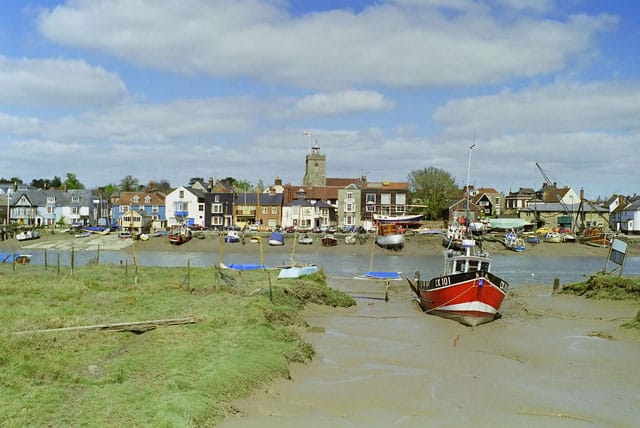
Approaching Wivenhoe from the Colchester road, the land and the river Colne appear. On the bank the town presents narrow stretch of painted houses, mast-tops, and weatherboarded cottages. At low tide the mud glistens, and wading birds pick through the channels. At high tide, dinghies and barges sit upright. It is a beautiful place - but Wivenhoe's beauty is a second act. For a large part of two centuries it was a working waterfront, loud with the clatter of iron rivets.
A River Town Built on Timber
Wivenhoe sits roughly five miles downstream from Colchester, at the point where the Colne becomes navigable for large vessels. The town occupied a position of natural commercial advantage in previous eras. By the early eighteenth century it had developed into a fishing settlement of modest importance, its quays handling oysters from the beds downstream. But it was shipbuilding that would define the town's character and bring it prosperity out of proportion to its size.
The yards that grew along the waterfront through the 18th century were not large by the standards of the Thames or the Medway, but they were prolific. Wivenhoe's shipwrights built smacks (a type of fishing boat), and barges for the coastal trade. Later increasingly ambitious vessels were constructed for the Navy. The deep-water frontage allowed hulls to be launched directly into the river. The surrounding Essex countryside provided ready supplies of oak. Families whose names run through the parish records built reputations over generations, passing down skills and yard tenancies.
By the early nineteenth century, the town's output was remarkable. Wooden warships and trading brigs went down the slipways and out into the North Sea. These were bound for service at sea, and the Napoleonic Wars brought a surge in Admiralty contracts. For a period Wivenhoe punched above its weight in the national shipbuilding effort. The population swelled accordingly. Sailmakers, ropewalkers, blacksmiths, and block makers all found employment in the web of trades that surrounded the yards. Pubs multiplied along the quay. The town's social life revolved around the river as completely as its economy did.
The transition from wood to iron in the mid-nineteenth century might have killed Wivenhoe's yards outright, but the town adapted, at least partially. Several yards shifted to yacht construction and repair, a trade that suited both the scale of the local facilities and the growing Victorian enthusiasm for recreational sailing. The Colne estuary, with its sheltered waters and proximity to the fashionable resorts of the Essex coast, became a natural base for yacht owners, and Wivenhoe's builders found a new clientele among the leisured classes who wanted smart racing craft and comfortable cruising boats. Iron and steel construction did eventually arrive at the waterfront. Firms operated yards that took on increasingly industrial commissions through the later Victorian period, building tugs, lighters, and small commercial vessels.
The Long Retreat
The twentieth century brought a slow contraction that few in the town could have foreseen during the confident Victorian era. The First World War generated a final burst of wartime construction, with minesweepers and patrol boats built at several Wivenhoe yards. But peacetime brought reduced orders and sharper competition from larger, better-capitalised yards elsewhere. The interwar years were lean. Some yards closed, their slipways silting up and their sheds quietly collapsing. The fishing fleet diminished as the oyster beds suffered from disease and over-harvesting, and the coastal trade that had sustained Wivenhoe's quays was gradually captured by road and rail. The Second World War brought another temporary reprieve. Landing craft and other small naval vessels were constructed along the waterfront, and the town's shipwrights once again found themselves pressed into urgent service. But the post-war decades in Essex history replicated a familiar story of decline at Wivenhoe. The last significant shipbuilding operation struggled on into the 1960s before finally closing. By the early 1970s, the sound of hammers and saws had gone from the waterfront almost entirely.
What remained was a town that had lost its primary industry but retained its physical fabric. The narrow streets running down to the quay, the weatherboarded houses that had sheltered generations of shipwrights and sailmakers, the hard standings and launching ramps — all survived, lending Wivenhoe a character that newer, more prosperous places could not replicate. The pubs stayed open, though their clientele had changed. The river continued to rise and fall, indifferently.
The Artists Arrive
Wivenhoe's reinvention as a cultural settlement happened gradually and from multiple directions. Artists had been drawn to the estuary since at least the mid-twentieth century, attracted by the quality of the light over the marshes and the unspoiled quality of the waterfront. Modern artists like the painter John Nash lived nearby and knew the landscape. The arrival of the University of Essex at the edge of neighbouring Colchester provided a further modest impact. The university brought academics, writers, and intellectuals into the area in significant numbers, and many of them gravitated towards Wivenhoe's cut-price housing and more appealing streetscape. The town became home to a notable concentration of poets, novelists, and artists connected to the university's literature and art departments. The university's art collection grew into an institution of national standing. A creative community took root that was nourished by the town's physical beauty but lumbered with intellectual exchange.
By the 1980s and 1990s, Wivenhoe had developed a reputation as something between a bohemian enclave and a commuter village — a place where you might find a retired professor, a working boatbuilder, and a contemporary sculptor living within a few doors of each other. The annual Wivenhoe Arts Trail, which opens private studios and gardens to the public, became one of the town's defining events, drawing visitors who came to see the art and stayed to walk the quay. The Nottage Maritime Institute, established in a converted waterfront building, kept alive the town's connection to Essex history and sailing heritage, offering courses and maintaining a collection of local maritime records.
What to Look for Today
Wivenhoe rewards the casual walker. Begin at the waterfront, where the old quay wall runs along the river and the hard sloping ramp used for launching and hauling vessels — remains visible at the eastern end of the frontage. The hard is one of the town's most direct links to its shipbuilding past, and at low tide you can see the timbers of old slipways emerging from the mud. Nearby, the configuration of certain waterfront buildings — their wide openings, double-height spaces, and proximity to the water's edge — betrays their origins as workshops, stores, and sail lofts, even when they have been converted to residential use.
Look, too, for the pubs which have served the waterfront community for centuries. And notice the painted facades of pinks, blues and ochres that give the quayside a distinctive palette. Limewash and distemper in strong colours were traditional finishes for waterfront buildings, offering both protection and visibility from the river.
Wivenhoe is a town that has lived two lives. Its first, as a place where skilled hands shaped timber and iron into seagoing vessels, lasted roughly two hundred years and were to be remembered by all who played a part in them. Its second, as a place where creativity and learning have found a home among the boatyards and the painted houses, is still unfolding. It all depends on the same thing: the river, broad and tidal, running through the middle.