Dagnam Park, Repton's Pond and further medieval history
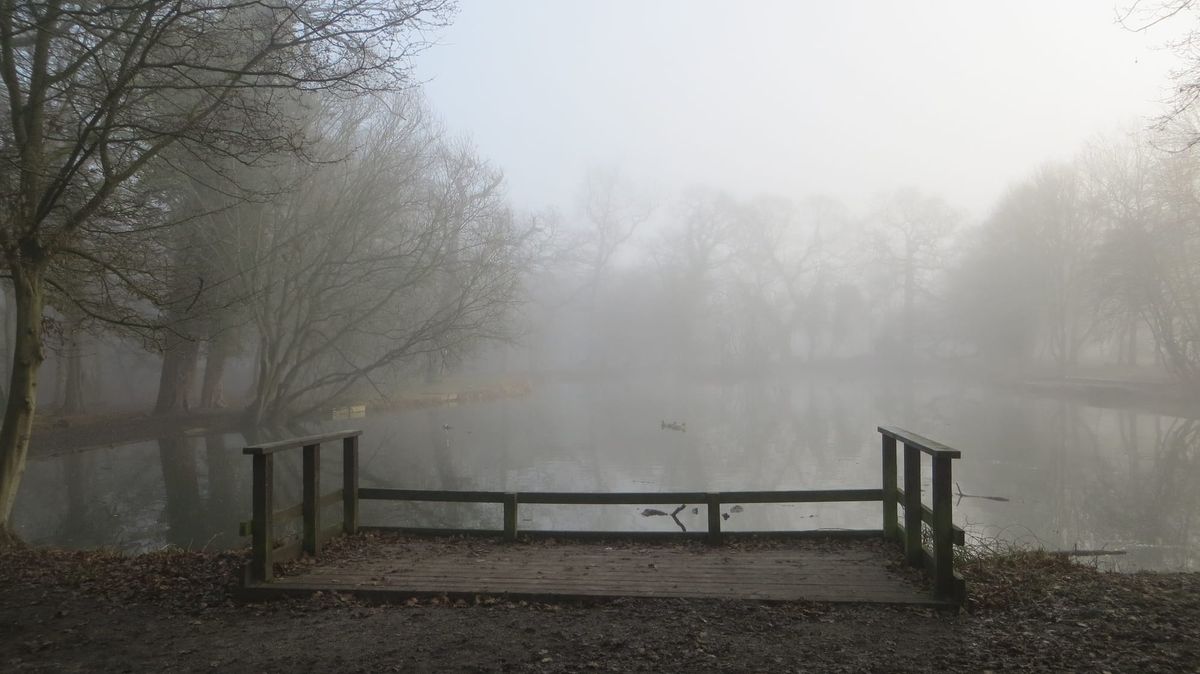
There is a pond in a nature reserve on the northern fringe of Greater London that most people walk past without a second thought. It sits among bare winter trees, its surface glassy and still, reflecting branches and mist. In summer, the water sinks low. This pond was once the subject of serious attention from one of the most celebrated landscape designers in English history. And the estate it belonged to was, for more than a century, one of the largest and most prominent in south Essex.
A historic landscaped park
The story of Dagnam Park in its familiar form begins in 1772, when the estate was purchased by Richard Neave, a merchant who had accumulated considerable wealth through trade with the West Indies and the Americas. Neave had served as a director of the Hudson's Bay Company, chaired the London Dock Company, and in 1783 would be appointed Governor of the Bank of England. He was a man of commercial substance. What he lacked was land.
The purchase of the Dagnams estate — then a modest property in the parish of Noak Hill, within the ancient Royal Liberty of Havering — was Neave's route from the counting house to the country house. He demolished the old manor, a building once visited by the diarist Samuel Pepys, and erected in its place a handsome Georgian mansion of red brick, three storeys high, with nine bays across the south front and a curved central projection. The house stood on high ground, looking out across parkland and ponds towards the woods of Hatter's Wood and Duck Wood to the south.
Neave did not stop at the house. Beginning in 1785, he and his descendants pursued a systematic campaign of land acquisition that continued for almost a hundred years. Farms and fields were absorbed one by one. By the middle of the nineteenth century, the Dagnam Park estate extended to some 1,700 acres, and it would eventually reach over 2,700 acres in the early twentieth century — a vast swathe of south Essex held by a single family.
Repton's Circular Pool
It was shortly before his death that the estate received the attention of Humphry Repton, the foremost landscape gardener of the age. Repton, who lived at Hare Street near Romford — not far from Dagnams — made at least three professional visits to the estate around 1812 to 1816, for which he received a fee of twenty guineas. No Red Book — the customary bound volume of proposals that Repton prepared for his clients — was produced for Dagnams. But the estate made enough of an impression on Repton to earn a place in his final published work, Fragments on the Theory and Practice of Landscape Gardening, which appeared in 1816.
In that book, Repton described the landscape at Dagnams as a park "wooded sufficiently," with a "pleasing offskip" in the distance. But the feature that drew his particular attention was a large circular pond to the south-west of the house. He found it unsatisfactory. The banks were bare and exposed, and cattle were kept away by a rough hurdle fence. The water reflected only the sky and the fence — there was no depth, no variety, no sense of the picturesque.
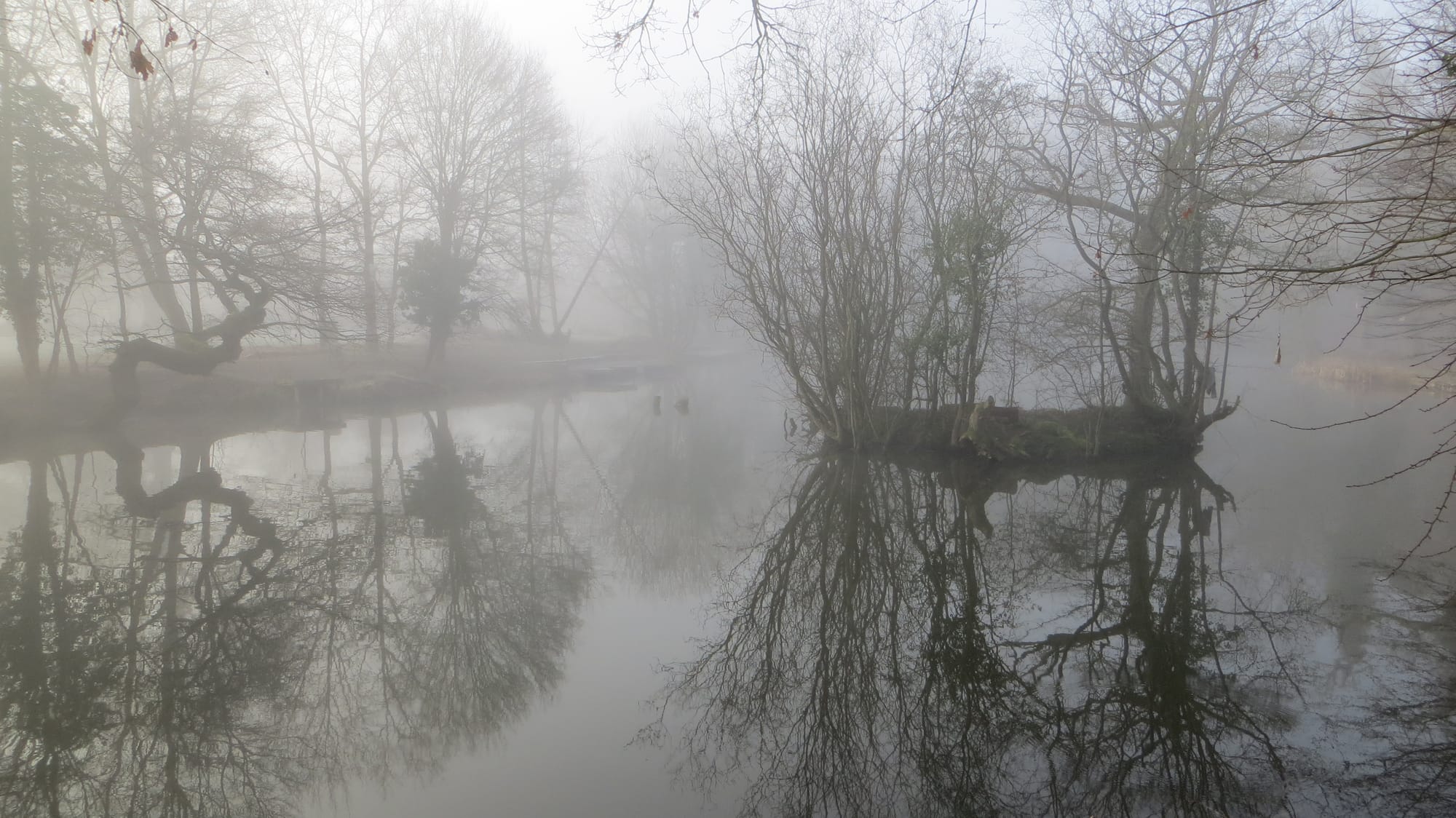
Repton's solution was characteristically elegant. He proposed that the fence on the far bank should be set back and dark-leaved planting allowed to grow up to overhang the water, creating rich reflections. Meanwhile, a section of fencing would be continued below the water's surface, allowing a gravelled or paved area where cattle could still drink without muddying the whole perimeter. The effect would be to transform a plain agricultural pond into what Repton called "an ornamental part of the dressed ground near the house." He illustrated the proposal with one of his signature before-and-after views.
The pond that Repton described almost certainly survives today, sitting quietly in what is now the Manor Nature Reserve. It is a remarkable thing — a piece of designed landscape, shaped by one of the great names in English garden history, still holding water in a suburban nature reserve two centuries later.
The Baronets of Dagnams
The nineteenth century at Dagnams was the century of the Neave baronets. Sir Thomas Neave, the 2nd Baronet, succeeded his father in 1814 and continued expanding the estate. He acquired the Bear public house in 1820 and the Manor of Gooshays in 1829. He served as Steward of the Liberty of Havering-atte-Bower and as a magistrate, and was himself appointed Sheriff of Essex in 1828. In the 1840s he built the Church of St Thomas and the Priory at Noak Hill, and funded a village school that opened in 1848, the year of his death.
The 2nd Baronet's grandson, Sir Richard Digby Neave, inherited the estate and was noted for his friendship with the landscape painter John Constable. Sir Richard added further farms to the holdings before his death in 1863. His successor, the 4th Baronet Sir Arundell Neave, lived until 1877, at which point the title passed to his son Sir Thomas, who was only three years old.
Throughout this period the estate operated as a largely self-contained world. The mansion sat at its centre, surrounded by formal gardens, specimen trees, and the ponds that Repton had sought to improve. To the south lay the ancient woods — Hatter's Wood, which had carried that name since at least 1293, and Duck Wood beyond it. The old moated site of Cockerells, a medieval manor that had once been held by the Earls of Northumberland, stood to the south-east, its rectangular moat still filled with water though the house within it had long since become Dagnam Park Farm. Paths and drives wound through the grounds, and the whole composition — mansion, park, ponds, and woodland — sat on high ground between what would later become Harold Hill and the village of Noak Hill.
A view of the house from 1890 shows the south front rising above a basement podium, with stone steps descending to a lawn planted with mature specimen trees. Beyond the lawn, the pond that had caught Repton's eye was visible, by then somewhat informal and overgrown — nature reasserting itself over the designed landscape.
A Vanished Palace on the Hill
Dagnam Park was not the only historic site of note, in the area. A short distance to the north, on the high ridge at Havering-atte-Bower, there had once stood something far grander: a royal palace.
Havering Palace had its origins in the Saxon period. Edward the Confessor is believed to have kept a residence there, drawn by the commanding position — the ridge overlooks the Thames estuary and the rolling country of south Essex and north Kent. After the Norman Conquest, the manor passed to William the Conqueror, and over the following centuries the palace grew into a substantial complex of buildings. A gatehouse gave access to a great chamber, royal apartments, two chapels, and quarters for the Lord Chamberlain and Lord High Treasurer. There were kitchens, a buttery, a salthouse, stables, and extensive parkland.
For centuries, English monarchs came and went. Edward III held court at Havering for five months in 1358. Henry VIII's first wife, Catherine of Aragon, hosted the king and French dignitaries there in 1519. Elizabeth I visited on several occasions in the 1560s and 1570s, and some accounts suggest she may have stayed at Havering before travelling south to deliver her famous speech to the troops at Tilbury in 1588, though this is disputed.
The palace's decline began in the seventeenth century. Charles I was the last monarch to stay there, in 1638. During the Civil War, Richard Deane — one of the signatories to the king's death warrant — ordered parts of the palace dismantled and its mature trees felled. By the time of the Restoration in 1660 it was described as little more than a heap of ruined buildings. Stone was salvaged for use in other local construction. By 1816 — the same year Repton published his account of the pond at Dagnams — no walls of Havering Palace remained above ground.
The village of Havering-atte-Bower itself took the second part of its name from the palace: "atte Bower" means "at the royal residence." And the broader area — the Royal Liberty of Havering — had enjoyed special privileges since the thirteenth century, including freedom from certain taxes and its own local magistrates, privileges that endured in various forms until the Liberty was formally absorbed into Essex in 1892.
When Neave purchased the Dagnams estate in 1772, he was buying land in a district that still carried the memory and the formal structures of royal occupation, even though the palace itself had been gone for nearly a century. The Bower House at Havering-atte-Bower, where Neave lived while his new mansion was being built, incorporated materials salvaged from the old palace. The landscape that Repton would later improve at Dagnams sat within a few miles of where kings and queens had hunted, held court, and received ambassadors for five hundred years.
From Essex to London
For most of its history, Dagnam Park lay firmly within the county of Essex. The Neave baronets served as High Sheriffs of Essex. The Liberty of Havering was an Essex institution. The farms, woods, and villages of the area were part of the fabric of the county.
That changed on 1 April 1965, when the London Government Act 1963 came into effect. The boroughs of Romford and Hornchurch, along with parts of Chafford hundred including Upminster and Rainham, were merged to form the new London Borough of Havering. Dagnam Park, Havering-atte-Bower, and the surrounding area passed out of Essex and into Greater London.
By then, the Neave mansion was already gone. The house had been requisitioned by the military during the Second World War and severely damaged by a V2 rocket in January 1945. The London County Council purchased the remaining 500 acres for £60,000 in 1947, intending to build the Harold Hill housing estate on the surrounding land while preserving the house as a community centre. In the event, the house was demolished around 1950. The park survived as open space, and today forms the heart of the Manor Nature Reserve.
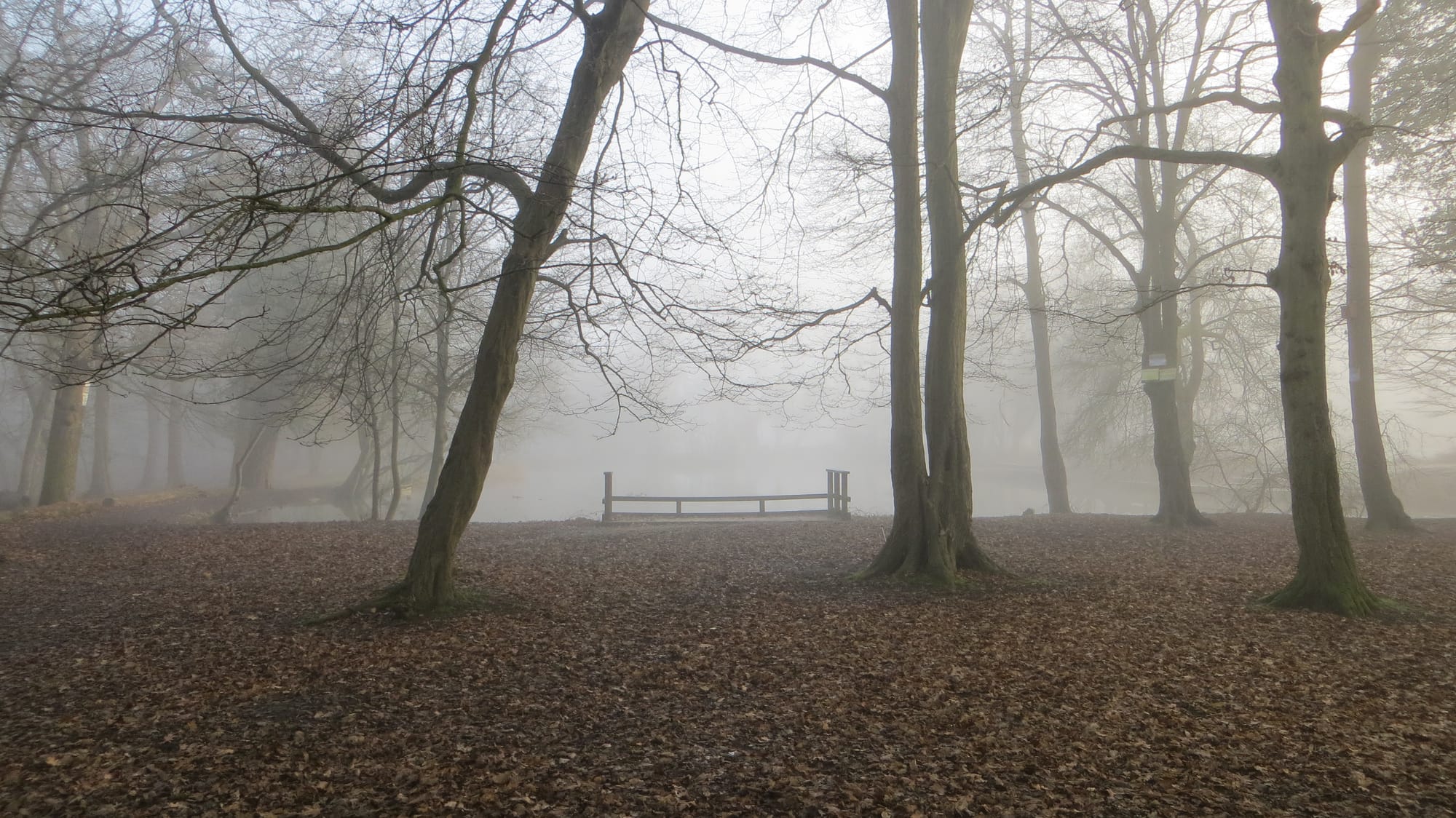
The eighteenth-century boundaries of the park are still largely intact. A curving track follows the line of the old carriage drive. Nineteenth-century cast-iron gateposts still flank the former entrance, half-hidden in woodland. Fallow deer graze the meadows. The ancient moat — now a breeding pond for great crested newts — holds water just as it did when the Earls of Northumberland held the manor in the fifteenth century. And the pond that Humphry Repton once considered too plain, too exposed, too lacking in picturesque character, still reflects the trees and the sky, much as it has done for at least three hundred years.
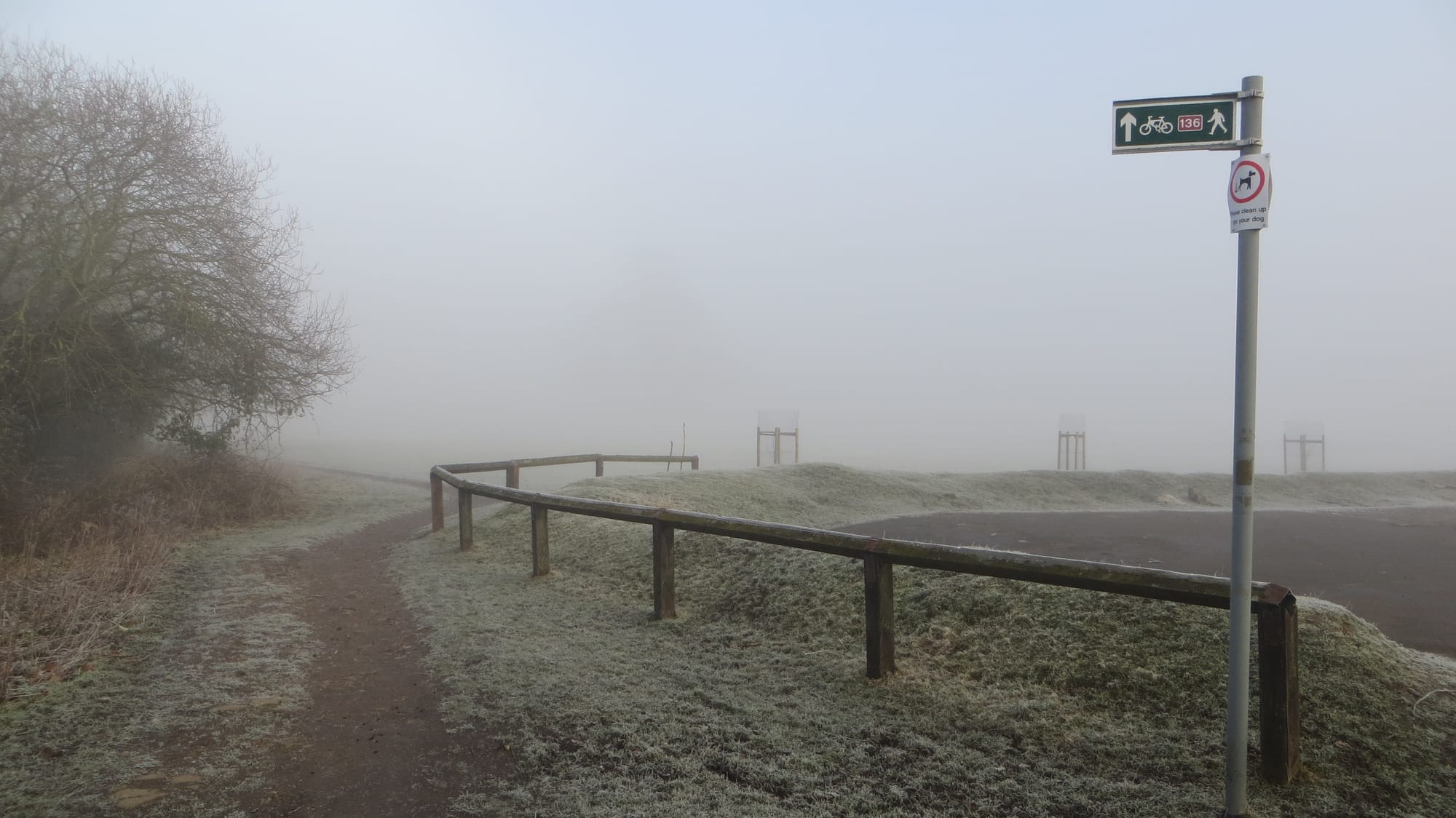
It is, in its quiet way, one of the most layered landscapes in the old county of Essex: a place where Saxon kings, Norman lords, Georgian merchants, and one of England's greatest garden designers have each left their mark — even if most of those marks are now invisible to the casual eye. Dagnam Park is now part of the Manor Nature Reserve in the London Borough of Havering, and is open to the public with unrestricted access.